MentorHub
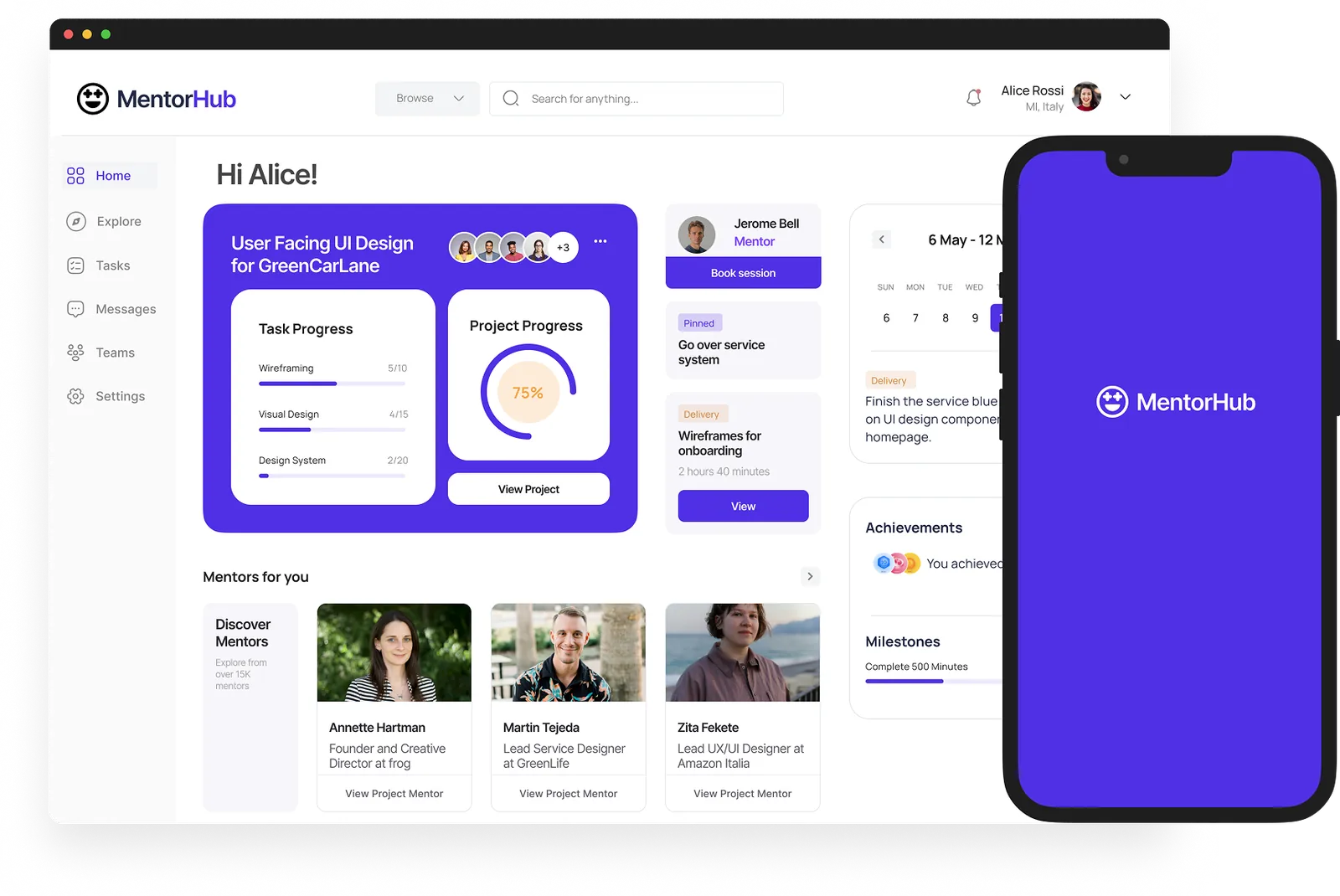
A service that brings outside mentors into startup internships, so interns get guidance without adding work for the team.
- Context
- Education
- Role
- Research, service design, strategy
- Team
- Individual
- Year
- 2025
Overview
It started with my own internship at GreenCarLane, where one senior designer guided every intern alongside their own work, and feedback rarely came. My master’s thesis asked how small startups could do better.
The problem
Startups rely on interns for real work but have no senior time to guide them. Interns lose motivation and leave, and the startup loses a future hire.
Process
- 01
Research
A survey of recent graduates and internship seekers, interviews with mentors and startup founders, and a literature review.
Startups want to mentor. They lack the time.
- 02
Problem framing
Mapped who is involved and what each one needs from an internship.
How might startups mentor interns without adding work for senior staff?
- 03
Strategy
Compared mentoring, work and internship platforms to find what none of them do.
Connect existing mentors to the tools teams already use.
- 04
Service system
Designed how interns, mentors and startups move through the service, and what runs behind it.
A five-step service blueprint.
What I found
Interns
They come to grow, but get little guidance.
63% of those surveyed rank mentorship and growth first. Mentorship is what they lack most.
Every task should come with a goal and feedback.
Mentors
They want ongoing pairs, not one-off calls.
Most mentors I interviewed prefer long-term, structured mentoring.
Mentoring should be a relationship, not a booking.
Startups
They are willing, but short on senior time.
Founders see interns as future hires, but mentoring overwhelms them.
The startup should not be the bottleneck.
Where MentorHub fits
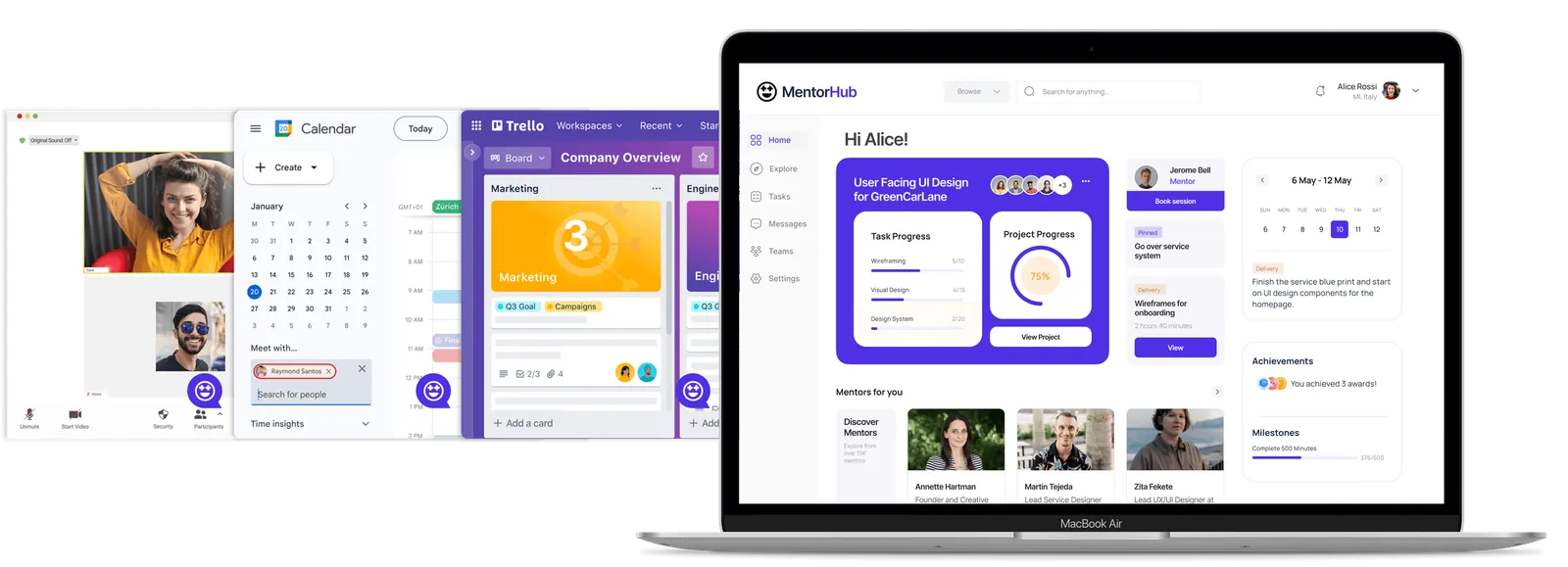
Each platform covers one part of an internship. None covers guidance during the work. MentorHub fills that gap, bringing ADPList mentors into Trello, Zoom and Google Calendar.
Finding it
Before the internship
Handshake, LinkedIn
Match candidates to internships, then stop.
Doing the work
During
Trello, Zoom, Google Calendar
Where the work happens, with no feedback.
Getting guidance
During
No platform
Left to a busy senior, so feedback rarely comes.
One-off advice
Any time, apart from the work
ADPList
Many mentors, for single calls.
Key decisions
- Design for the startup first. Interns can’t bring a programme into a company.
- The startup switches it on and sets the goals.
- Borrow mentors, don’t build a network. A new network starts empty on both sides.
- Mentors come from ADPList from day one.
- Live inside the tools. A busy team won’t adopt another app.
- A layer inside Trello, Zoom and Google Calendar.
- Let the work set the rhythm. Scheduled reviews come too late to help.
- Each finished task or call prompts short feedback.
The concept
A mentoring layer for startup internships. It adds the guidance a small team can’t give, without adding another app.
Matching
Each intern is paired with an outside mentor by skills, goals and available hours.
Goals
The startup sets tasks and goals at the start, so progress can be followed.
Feedback loop
A finished task or an ended call sends a short prompt in Trello or Zoom.
One view
A shared dashboard keeps goals, sessions and feedback in one place for all three.
Service blueprint
1Join
Intern
Signs up and sets learning goals.
Mentor
Joins from ADPList and sets the hours they can give.
Startup
Sets up the internship: tasks, goals and length.
What MentorHub shows
A guided sign-up for each of the three.
Behind the scenes
Checks accounts and imports mentor profiles from ADPList.
Fail points
- Risk
- Vague goals can’t be followed up.
- Fix
- Goals are written down at sign-up and confirmed by the startup.
2Match
Intern
Gets a suggested mentor.
Mentor
Accepts the intern.
Startup
Approves the pairing.
What MentorHub shows
Suggested matches to accept or decline.
Behind the scenes
Pairs people by skills, industry, goals and available hours.
Fail points
- Risk
- A poor match ends the mentoring early.
- Fix
- Either side can ask for a new match after the first call.
3Work together
Intern
Works in the team’s tools and meets the mentor on video.
Mentor
Gives short feedback after calls and finished tasks.
Startup
Follows progress without running the sessions.
What MentorHub shows
One dashboard for goals, sessions and feedback.
Behind the scenes
A finished Trello task or an ended Zoom call sends a prompt; sessions are logged.
Fail points
- Risk
- Busy mentors go quiet.
- Fix
- Prompts are short, and the startup sees when feedback stops.
4Review
Intern
Rates the mentoring.
Mentor
Reviews progress against the goals.
Startup
Sees a progress report.
What MentorHub shows
Short forms and a progress report.
Behind the scenes
Sends the forms and sums up the answers.
Fail points
- Risk
- Long forms get skipped.
- Fix
- A few questions, answered where the team already works.
5Finish
Intern
Gets a certificate and joins the alumni community.
Mentor
Can keep mentoring the intern.
Startup
Decides whether to hire.
What MentorHub shows
Certificate, LinkedIn badge and alumni community.
Behind the scenes
Issues certificates and updates profiles.
Fail points
- Risk
- The relationship ends with the internship.
- Fix
- Mentor and intern can stay paired afterwards.
Reflection
The sample is small, so a pilot is the real test: I’d measure how often interns get feedback and how many are hired. The strongest objection I heard: startups without seniors shouldn’t take interns. They will anyway, so I designed for the internship as it is.